Reviewing the Bass Fishing Scene SVG for Real Embroidery
As a designer who spends half my life digitizing and the other half stitching, I have learned that not every graphic translates well to thread. We often see listings for Bass Fishing Scene Svg, Fisherman Svg that look crisp on a screen but fail miserably under the needle. Today, I am evaluating this specific design asset from the perspective of practical application. I am not just looking at the lines; I am looking at how it will behave on fabric, how it will hold up after washing, and whether it adds genuine value to a handmade product.
First Impressions: Mood and Visual Personality
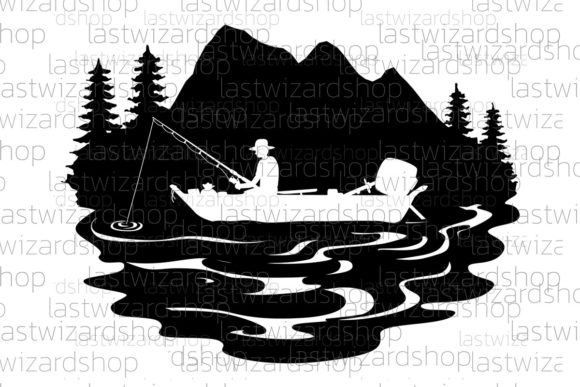
The immediate appeal of the Bass Fishing Scene Svg, Fisherman Svg lies in its narrative quality. It is not merely a fish or a hook; it is a scene. This contextual depth creates a mood of tranquility and hobbyist pride. For embroidery, this is crucial. A standalone icon can feel sterile, but a scene invites the viewer into a story. The silhouette style mentioned in the product description suggests clean lines and bold shapes, which are generally friendly to embroidery machines. However, the devil is in the details. When I first loaded the file into my viewing software, I looked for potential trouble spots: tiny gaps that might cause thread breaks, overly dense areas that could puckering the fabric, and complex curves that might require excessive trimming.
The visual personality here is rustic and outdoorsy. It fits naturally into the Crafts category, specifically appealing to those who appreciate heritage styles and outdoor leisure. For a designer, this means the color palette should be earthy—olive greens, slate blues, and warm browns—rather than neon or overly saturated tones. The layout appears balanced, which is essential for maintaining structural integrity during stitching.
Real-World Application: From Digital File to Finished Product
Let us move beyond theory and discuss where this machine embroidery design actually shines. I recently considered using a similar fishing-themed graphic for a custom order: a high-quality canvas tote bag for a local fishing guide’s merchandise. The Bass Fishing Scene Svg, Fisherman Svg would be ideal for this. Tote bags provide a stable, flat surface with minimal stretch, allowing the design to sit cleanly without distortion. The silhouette nature of the graphic ensures that even from a distance, the image is recognizable, which is vital for branding.
Beyond totes, this design has strong potential for sweatshirt embroidery. A left-chest placement on a heather grey hoodie creates a subtle, professional look. However, one must be cautious with the scale. If the scene is too detailed, shrinking it down for a chest logo might cause the stitches to merge, losing the definition of the fisherman or the boat. In such cases, simplifying the embroidery file or choosing a larger back-print placement might be necessary.
For Etsy sellers and small shop owners, versatility is key. This graphic could easily transition into an embroidered patch. Patches are trending, and a fishing scene works well on denim jackets or caps. When creating patches, the density of the stitch becomes critical. You want enough coverage to hide the backing material but not so much that the patch becomes stiff and uncomfortable. Testing the stitch density on a scrap piece of twill is non-negotiable here.
Navigating Technical Challenges and Fabric Constraints
While the design is attractive, it is not without its challenges. The product description mentions it can be used for various items, including mugs and vinyl cuts, but as an embroiderer, I must focus on textile limitations. One major concern with scene-based graphics is the presence of thin lines or small details, such as the fishing rod or ripples in the water. On stretchy fabric like jersey knit t-shirts, these fine details can distort if the stabilizer is not robust enough. I always recommend using a cut-away stabilizer for knits to ensure the design remains crisp after wear and wash.
Another consideration is dark fabric. If you are stitching this design on a black or navy garment, you must ensure that the underlying layers do not show through. This might require adding a layer of topping or using a higher density fill stitch, which increases production time. Additionally, curved surfaces like caps present a unique challenge. The front panel of a cap is small and curved. Fitting a full "scene" onto this space requires careful resizing. If the design is too wide, it will wrap around the curve and look distorted. In such cases, isolating just the fish or the fisherman might be a smarter design choice than using the entire scene.
Textured fabrics, such as terry cloth towels or fleece blankets, also require attention. The loops in the fabric can swallow small stitches. For these projects, using a water-soluble topping is essential to keep the running stitch and satin stitch elements visible and clean. Without it, the intricate parts of the Bass Fishing Scene Svg, Fisherman Svg might get lost in the pile of the fabric.
Enhancing Brand Value and Customer Trust
Why does the quality of your digital embroidery file matter? Because it directly impacts perceived value. A sloppy stitch-out with loose threads and puckering signals amateurism. A clean, well-digitized design signals professionalism. When a customer receives a personalized gift featuring this fishing scene, they are not just buying a shirt; they are buying an experience. The clarity of the stitching reinforces their trust in your brand.
For commercial embroidery projects, consistency is king. If you are producing fifty aprons for a fishing lodge, every single one needs to look identical. This requires a reliable file that does not require constant tweaking. Before committing to a large run, I always advise running a test on the exact fabric you plan to use. Check the thread colors against the fabric background. High contrast usually works best for silhouettes, ensuring the design pops. Low contrast can look sophisticated but risks being overlooked.
Practical Designer Notes for Best Results
To get the most out of the Bass Fishing Scene Svg, Fisherman Svg, follow these practical steps:
- Test on Scrap Fabric: Never stitch directly on your final garment. Use a scrap piece of the same material to check tension and density.
- Check Hoop Size: Ensure the design fits comfortably within your hoop with adequate margin for framing. Do not crowd the edges.
- Inspect Small Details: Zoom in on the digital preview. Are there any nodes or points that look too sharp? These can cause thread breaks.
- Use Proper Stabilizer: Match your stabilizer to your fabric. Cut-away for knits, tear-away for wovens, and topping for textured surfaces.
- Verify Licensing: The product description mentions commercial use for items like T-shirts and mugs, but always confirm the specific license terms before selling finished products. Some licenses restrict the number of units you can sell or prohibit sharing the digital file itself.
- Mockup Testing: Create printable mockups in both black and white to see how the design holds up without color reliance. This helps identify structural weaknesses in the layout.
In conclusion, the Bass Fishing Scene Svg, Fisherman Svg is a versatile asset for the right project. It offers a strong narrative element that appeals to a specific niche of outdoor enthusiasts. By understanding the technical requirements of embroidery—such as stabilizer choice, fabric texture, and stitch density—you can transform this digital graphic into a high-quality handmade product. Whether you are creating holiday embroidery gifts or stocking your small shop product line, treating the design with technical respect will yield professional, durable, and visually appealing results.