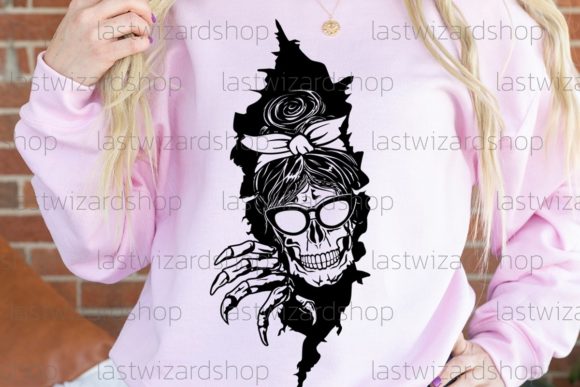
Mom Skull in the Wall: A Designer's Review
When I first pulled up the Mom Skull in the Wall Svg Skull Came out file on my screen, I didn't just see a Halloween graphic; I saw a potential statement piece for a boutique apparel line. As someone who spends hours digitizing and stitching, my immediate reaction to any new design asset is to look past the marketing hype and evaluate its structural integrity for real-world application. This particular graphic, featuring a skull emerging from a chest cavity with a maternal twist, carries a bold, edgy mood that fits perfectly into the current trend of "spooky cute" or alternative family-themed merchandise. However, translating a digital SVG intended for cutting or printing into a tangible machine embroidery design requires a critical eye for detail, density, and fabric compatibility.
First Impressions and Visual Personality
The visual personality of this design is undeniably strong. The concept of a skull "coming out" of the chest suggests depth and layering, which is fantastic for creating dimension in an embroidery project. In a digital format like SVG, PNG, or DXF, these layers are flat, but as an embroiderer, I immediately start thinking about how to replicate that depth using thread. The layout appears centered and balanced, making it ideal for the front of a t-shirt or the main panel of a tote bag. The theme bridges the gap between holiday fun and year-round alternative fashion, giving it versatility beyond just October sales. For an Etsy seller or small shop owner, this kind of crossover appeal is gold, allowing you to market the item as a Halloween special one month and a rock-and-roll mom gift the next.
Real-World Application: The Custom Sweatshirt Scenario
To truly test the viability of this design, let's walk through a realistic scenario. Imagine a client comes to your craft business requesting a custom hoodie for a "cool mom" who loves horror movies but also cherishes her family. You decide to use the Mom Skull in the Wall Svg Skull Came out concept as the basis for a custom sweatshirt embroidery. Before you even hoop the fabric, you have to consider the translation from vector lines to stitches. If you were to treat this as a standard fill, the "chest" area might become too dense, leading to a stiff, cardboard-like feel on the garment. Instead, this design screams for a mix of techniques. Perhaps the skull itself utilizes a tight satin stitch for definition, while the surrounding "chest" area uses a lighter fill stitch or even a textured running stitch to mimic clothing fabric without adding bulk.
In this scenario, the success of the finished product hinges on how well the design handles the curvature of the sweatshirt and the stretch of the fleece or cotton blend. A design that looks crisp on a computer monitor can easily pucker or distort if the stitch density isn't adjusted for the fabric texture. For a project like this, I would recommend testing the design on a scrap piece of the exact same material first. This allows you to check if the details of the skull face remain clear or if they get lost in the nap of the fabric.
Navigating Fabric Challenges and Hoop Constraints
One of the most critical aspects of reviewing a graphic like this for embroidery is identifying where it might fail. The intricate nature of a skull face, combined with the implied layers of the "wall" or chest, presents specific challenges regarding hoop size and fabric type. If you are working with a standard 4x4 hoop, you might find yourself cropping essential details of the design, especially if the original SVG has a wide aspect ratio. Always verify the dimensions of the source file against your machine's maximum hoop capacity before committing to a purchase or a client deadline.
Fabric choice is equally paramount. While this design would look striking on a structured canvas tote bag design or a sturdy denim jacket, it requires caution on stretchy knits or thin performance fabrics. The "skull came out" effect implies a breaking of the surface, which in embroidery terms means a lot of thread coverage. On a thin baby onesie, this could cause significant puckering or discomfort against the skin. If you intend to use this for baby embroidery, I strongly advise scaling the design down significantly and reducing the stitch count, or perhaps adapting it into an applique design where the skull is a separate fabric piece sewn on, rather than thousands of stitches directly into the garment.
Furthermore, dark fabrics present a unique opportunity and risk. A white skull on a black hoodie is a classic high-contrast look, but you must ensure your underlay stitches are sufficient to prevent the dark fabric from peeking through the lighter thread colors. Conversely, stitching this on a dark heather grey might require a different thread palette to maintain the spooky vibe without losing definition. Always run a black-and-white mockup test to see how the values translate before selecting your final thread colors.
Commercial Viability and Brand Consistency
For those running a small shop product line or selling digital embroidery files, the professionalism of the final output directly impacts customer trust. A design like Mom Skull in the Wall Svg Skull Came out has high "giftability" factor. It speaks to a specific niche—moms who don't take themselves too seriously and embrace the macabre. When executed well, with clean edges and appropriate stabilizer usage, it elevates the perceived value of the item. Customers are willing to pay more for a personalized gift that feels handmade and thoughtful rather than mass-produced.
However, consistency is key. If you are using this graphic across multiple products, such as caps, aprons, and pillow covers, you need to ensure the scaling and placement remain consistent with your brand's aesthetic. A design that works beautifully on a flat tea towel might need significant re-digitizing to work on the curved surface of a baseball cap. The "broken wall" effect could look distorted if not centered perfectly on the cap's front panel. Therefore, treating this SVG as a starting point for customization, rather than a one-size-fits-all solution, is the mark of a professional decorator.
Practical Notes for the Serious Maker
Before you dive into production, here are a few practical steps to ensure success with this design:
- Stabilizer Selection: Given the likely density of a skull design, use a cut-away stabilizer for stretchy fabrics like t-shirts and hoodies to provide long-term support. For woven fabrics like tote bags, a tear-away might suffice, but test first.
- Detail Inspection: Zoom in on the eyes and teeth of the skull. In small sizes, these tiny details can merge into a solid blob of thread. You may need to manually adjust the spacing in your digitizing software if you are converting the SVG yourself.
- Licensing Check: Since the source is described as an SVG/PNG/DXF bundle often used for Cricut or Silhouette, verify the license terms carefully. Many graphic designers sell these files for personal use or limited commercial print-on-demand, but they may not grant rights for reselling the digital embroidery file itself or for unlimited commercial manufacturing. Always clarify this to protect your craft business.
- Wash Testing: Embroidered items, especially those with dense thematic graphics, need to withstand washing. Test a sample on a similar fabric to ensure the threads don't fray or the design doesn't shrink disproportionately after the first wash.
In conclusion, the Mom Skull in the Wall Svg Skull Came out offers a compelling visual narrative that, when handled with technical precision, can result in stunning custom apparel and home decor. It is not just a holiday novelty; it is a versatile graphic that, with the right stitch strategy and fabric pairing, can become a staple in your portfolio of handmade products. By respecting the limitations of the medium and leveraging the strengths of the design, you can create items that resonate deeply with your customers and stand the test of time.